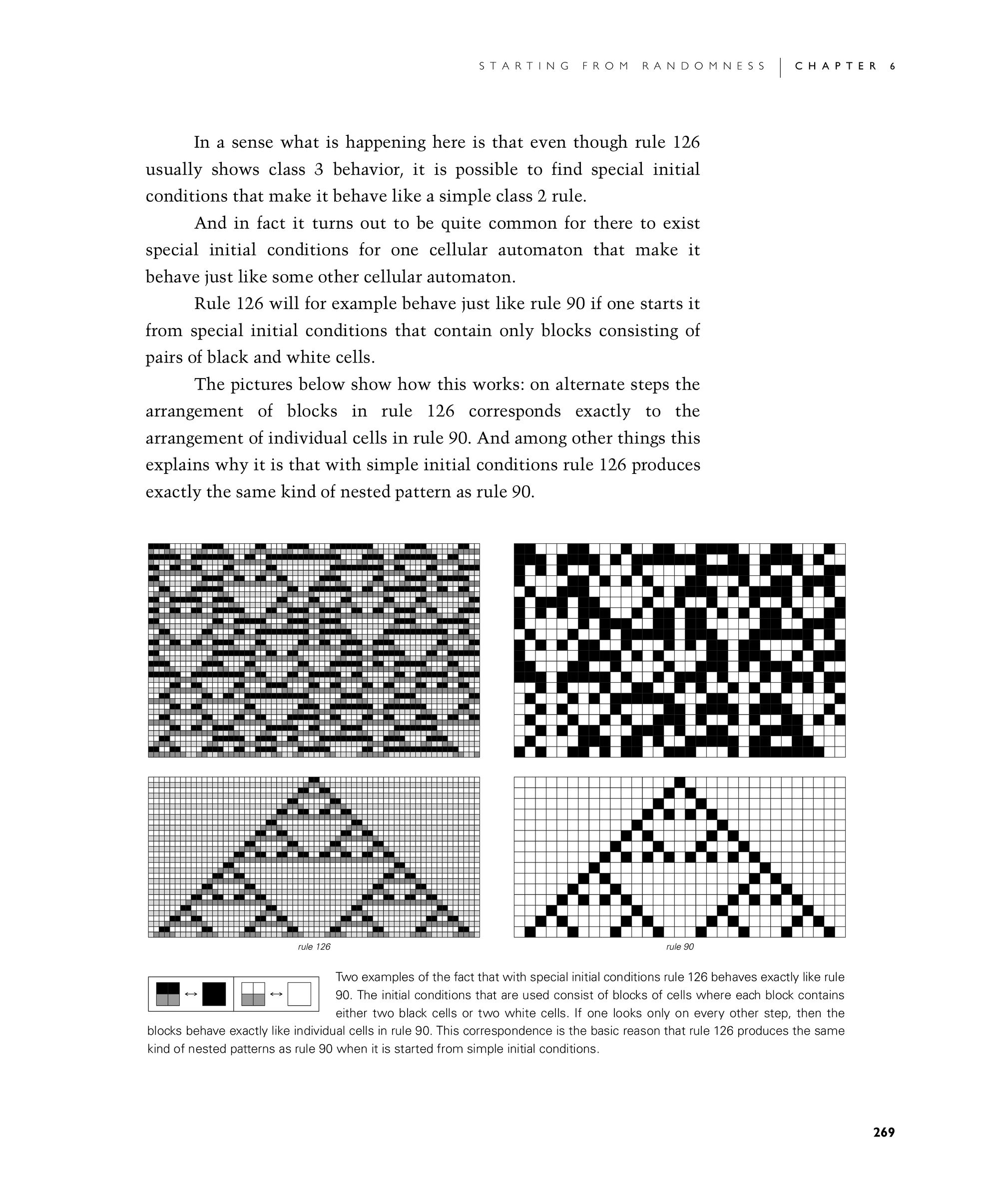
In a sense what is happening here is that even though rule 126 usually shows class 3 behavior, it is possible to find special initial conditions that make it behave like a simple class 2 rule.
And in fact it turns out to be quite common for there to exist special initial conditions for one cellular automaton that make it behave just like some other cellular automaton.
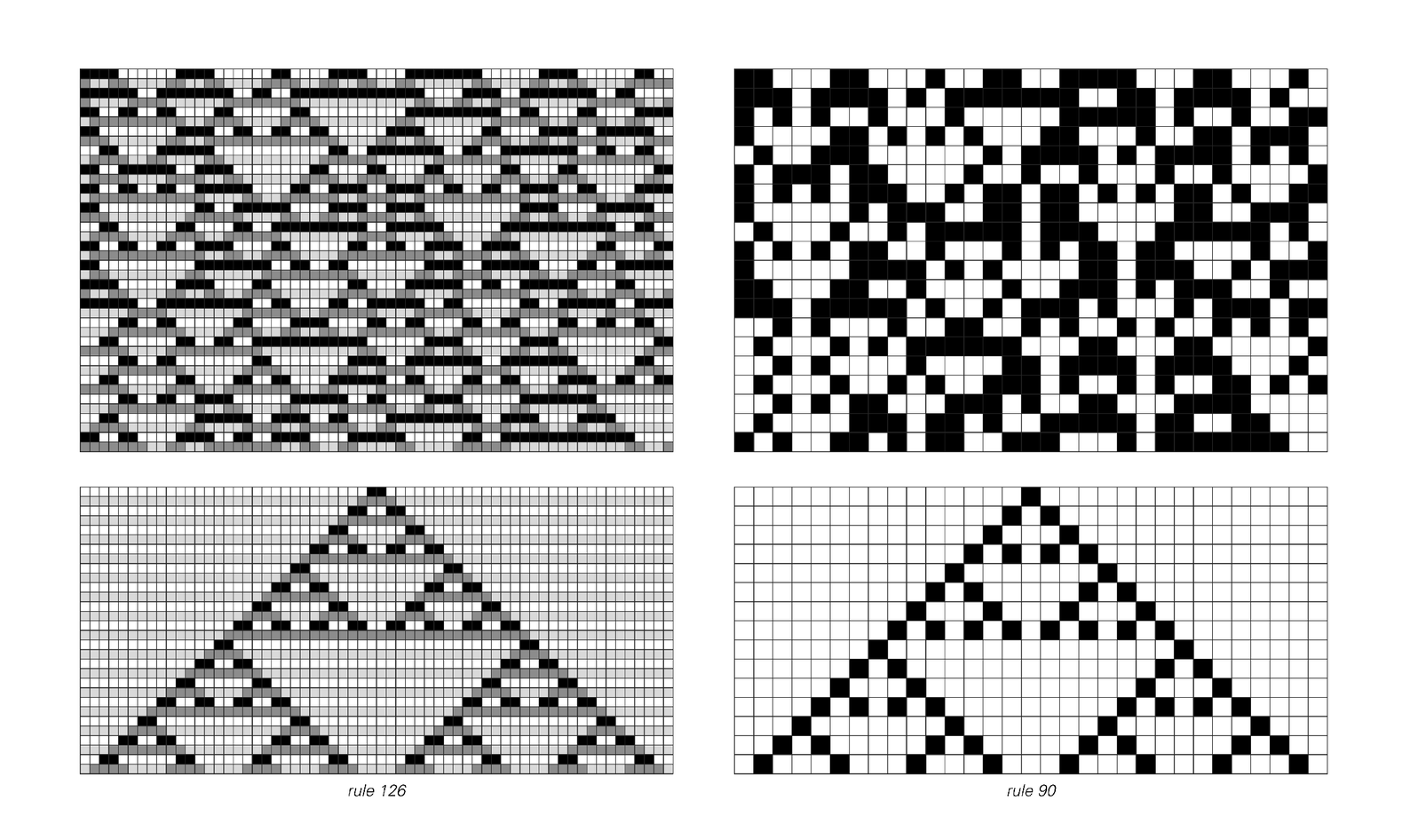
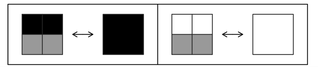
Rule 126 will for example behave just like rule 90 if one starts it from special initial conditions that contain only blocks consisting of pairs of black and white cells.
The pictures below show how this works: on alternate steps the arrangement of blocks in rule 126 corresponds exactly to the arrangement of individual cells in rule 90. And among other things this explains why it is that with simple initial conditions rule 126 produces exactly the same kind of nested pattern as rule 90.