Notes
Chapter 6: Starting from Randomness

Continual injection of randomness [in cellular automata]
History [of emergence of order]
Properties of [initially random cellular automaton] patterns
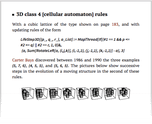
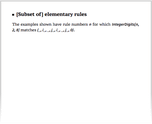
3D class 4 [cellular automaton] rules
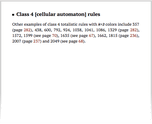
Class 4 [cellular automaton] rules
[Classes in] continuous cellular automata
Different runs [of initially random cellular automata]
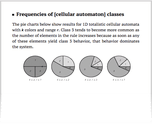
Frequencies of [cellular automaton] classes
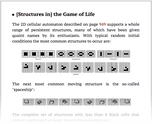
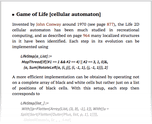
Game of Life [cellular automaton]
History [of cellular automaton classes]
Nearby cellular automaton rules
Random initial conditions in other systems
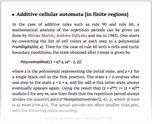
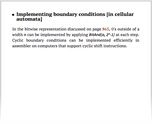
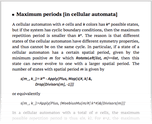
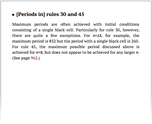
Additive cellular automata [in finite regions]
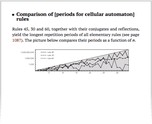
Comparison of [periods for cellular automaton] rules
Implementing boundary conditions [in cellular automata]
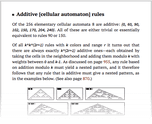
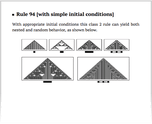
Additive [cellular automaton] rules
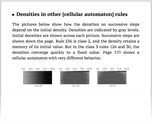
Densities in other [cellular automaton] rules
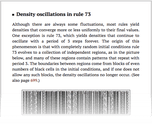
Density oscillations in rule 73
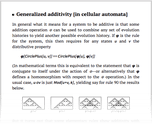
Generalized additivity [in cellular automata]
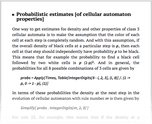
Probabilistic estimates [of cellular automaton properties]
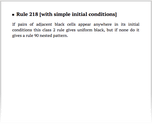
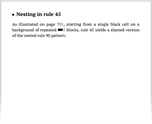
Rule 218 [with simple initial conditions]
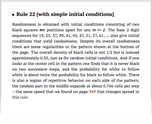
Rule 22 [with simple initial conditions]
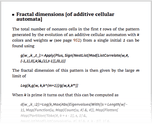
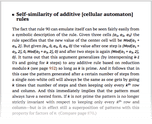
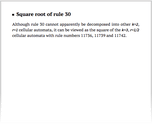
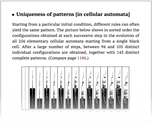
Fractal dimensions [of additive cellular automata]
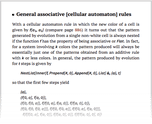
General associative [cellular automaton] rules
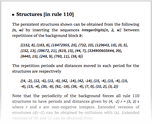
Localized structures [in cellular automata]
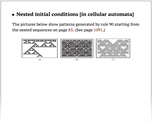
Nested initial conditions [in cellular automata]
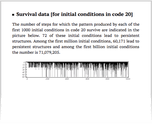
Repeating blocks [in cellular automata]
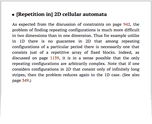
[Repetition in] 2D cellular automata
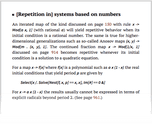
[Repetition in] systems based on numbers
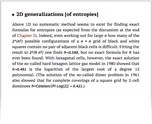
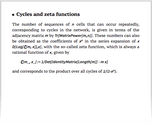
2D generalizations [of entropies]
[Attractors in] discrete systems
Attractors in systems based on numbers
[Cellular automaton state] network properties
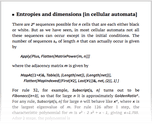
Entropies and dimensions [in cellular automata]
Excluded blocks [in cellular automaton evolution]
Generating functions [for regular languages]
History [of dynamical systems approaches]
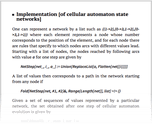
Implementation [of cellular automaton state networks]
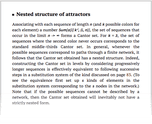
Nested structure of attractors
[Properties of] random networks
Spacetime patches [in cellular automata]
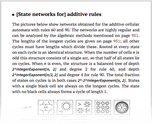
[State networks for] additive rules
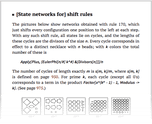
[State networks for] shift rules
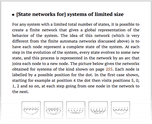
[State networks for] systems of limited size
Surjectivity and injectivity [of cellular automaton maps]